In this recorded conversation, Maanee Chrystal introduces her work in somatic therapy, dance and embodied education, including the Somatic Institute for Women. She describes a longstanding interest in the hidden, suppressed and denied parts of experience that she calls the shadow.
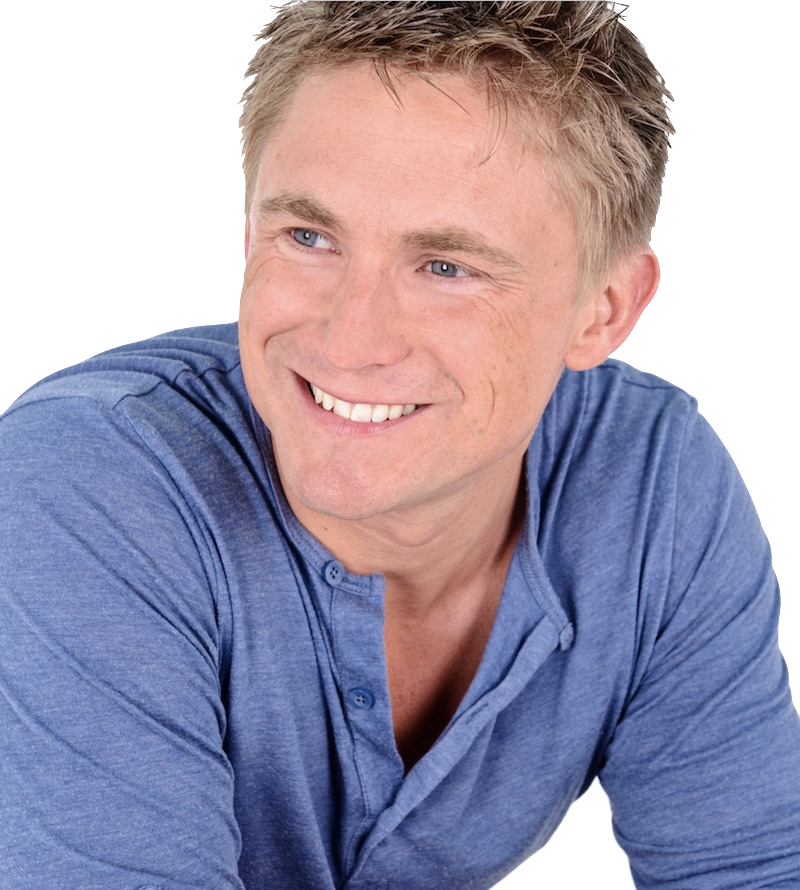
Christian Pankhurst is the founder of Heart iQ, working on deep transformational practice in groups, tribes and communities. His focus is heart-centred communication, group dynamics, and embodied practices that help people expand into emotional and energetic ranges they have denied, exiled or carried shame around, so they can become more integrated and whole.
In a recorded conversation, Maanee and Christian explore what shadow work actually means and how it interacts with somatic, nervous-system-aware facilitation.
What the shadow means
Asked to define the shadow, Maanee keeps it simple: it is what we don't know, what we cannot see. She goes further, saying the shadow is also where a lot of hidden potential resides. It holds undigested experience and the parts of ourselves we learned, often indirectly, weren't allowed to be if we wanted love and connection. She's careful to separate the common association of shadow with something negative from what it actually is: unseen, not necessarily bad. Drawing on Jungian therapist Robert Johnson's phrase, she calls this hidden material our "inner gold", suppressed light and power alongside whatever we'd rather not look at.
The strategies that protect us
Christian connects this to how he talks about trauma in Heart iQ, describing it as information and energy stored in the body that hasn't yet been integrated. He notes that what's unknown often doesn't want to be known, because there are protective mechanisms in place keeping it hidden. In Heart iQ's language these are called "stewards": functional defence strategies that keep others out and stop us revealing ourselves fully. Training facilitators to work with this, he says, means learning to navigate people's defences artfully and safely, without forcing the pace.
A moment in the conversation illustrates the point directly. Maanee, recovering from illness, catches herself suppressing a cough so as not to look unprofessional, then uses it as a live example: the instinct to manage how we're perceived, even over something as small as a cough, shows how thoroughly we can be shaped by seeking validation and approval. She describes how, after years of this work, she still notices defence mechanisms she isn't always aware of, and that shadow work has taught her not to take herself too seriously, because everyone is doing some version of the same thing: wanting love and connection, and developing quirks and strategies to get it that can end up cutting off authenticity in the present moment.
Including the body
Both point to why the somatic and nervous-system-aware side of this work matters. Maanee explains that shadow work can be mostly mental unless it's paired with learning to feel safe in the body. Without that felt sense of safety, someone might understand intellectually that they're seeking validation while still being stuck in a freeze or fawn response. Bringing somatic work into shadow work, in her experience, is what opens a genuine sense of safety, and with it a feeling of being more free and relaxed.
Being witnessed by a group
They also discuss why this work in a group setting adds something that one-to-one work doesn't fully replicate. Maanee describes how group work lets people see they are not alone in carrying shame or seeking approval, and that when someone reveals a part of themselves they carry shame about and is still met with love by the group, it can shift something significant in how they move through life afterwards, both for them and for those witnessing. Christian adds that a well-trained group can sometimes attune to a person's blind spots better than that person can alone, offering feedback in an embodied, non-critical way that helps reveal what isn't being owned.
Desire, responsibility and boundaries
Christian brings in an example from conversations he's had with women about what he calls "leaky sexual energy": unowned desire that goes underground and can surface as touch or interaction charged with more than what's being said. He notes that this can create the opposite problem too, an overcorrection into shutting sexual energy down entirely out of fear of becoming that pattern, which brings its own kind of contraction. He's clear that this territory is shaped by complex factors, including childhood experience, cultural context, and collective conversations about gender and power, and that facilitators need real training to work with it responsibly rather than skipping steps.
Working without guarantees
Maanee links this to projection: when we deny a part of ourselves, we often judge it in others instead, casting it into the shadow rather than owning it. In her experience, the more something is repressed, the more it tends to find another way to express itself in the body, sometimes as pain, tension or other physical symptoms, though she's careful to frame this as her own observation rather than a medical claim. She also cautions against overpromising what any single training or session can resolve, describing this work as opening a portal of possibility rather than a guaranteed cure.
Christian closes by noting what he values in this kind of format: people tend to get a personal imprint of their own healing at the same time as picking up professional skill, rather than the two being kept separate. For those already doing one-to-one work, he suggests there is real value in learning to work with groups and circles, though it requires a distinct set of skills, including reading a group field, knowing when to slow down and hold space and when to move things forward, and building the kind of nervous-system awareness that lets a group feel safe enough to open up together.
Two entry points into shadow work described in the conversation
Mental/cognitive approach
Naming and understanding a defense mechanism or pattern intellectually, which Maanee notes can leave a person still stuck in freeze or fawn responses.
Somatic/nervous-system approach
Paying attention to sensations, pace and a felt sense of safety alongside understanding the pattern.